
Explore Cork City on a guided walking tour. Visit the English Market, St Fin Barre’s Cathedral, Shandon, Elizabeth Fort, and uncover centuries of Cork’s fascinating history.
Cork is a city best explored on foot. Its narrow lanes, historic streets, riverside walkways, hidden courtyards, and centuries-old landmarks reveal themselves far more effectively at walking pace than from a bus or car. A guided Cork City walking tour offers visitors the opportunity to discover the stories, people, and events that have shaped Ireland’s second-largest city while exploring many of its most important attractions.
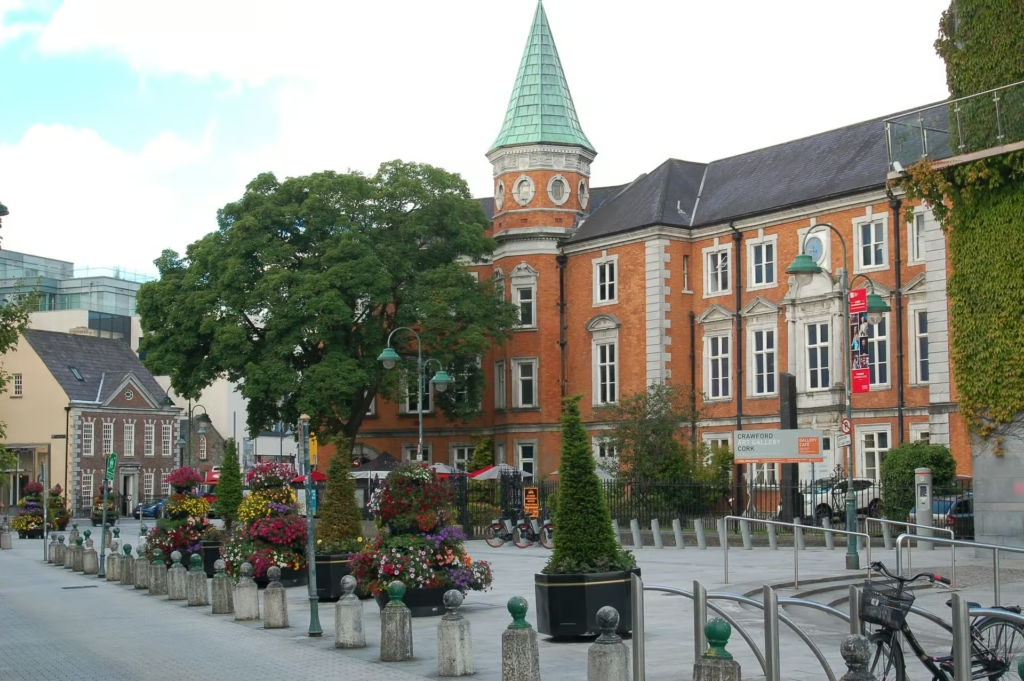
Over the course of approximately one hour, visitors are guided through the heart of Cork by a knowledgeable local guide who brings the city’s rich history to life. From medieval trading routes and merchant wealth to revolutionary history and architectural treasures, every street reveals another chapter in Cork’s remarkable story.
Why Explore Cork on Foot?
Cork’s city centre is compact, walkable, and packed with historic sites. Many of its most interesting locations are situated within a relatively small area, making a walking tour one of the most efficient and enjoyable ways to discover the city.
Benefits of joining a guided walking tour include:
- Expert local knowledge.
- Historical context often missed by independent visitors.
- Access to hidden locations.
- Interesting local stories and legends.
- Orientation for first-time visitors.
- Opportunities to ask questions.
- A deeper understanding of Cork’s culture and heritage.
Whether you’re spending a day or a week in Cork, a walking tour provides an excellent introduction to the city.
Cork: A Historic Trading City
The tour begins by exploring Cork’s development as one of Ireland’s most important trading centres.
For centuries, Cork was a key hub for commerce with Britain, continental Europe, and North America. Its strategic location on the River Lee allowed merchants to import and export goods that helped transform the city into a prosperous commercial centre.
The influence of international trade can still be seen throughout the city today, from its street layout and architecture to its diverse cultural influences.
Following the River Beneath Cork’s Streets
One of Cork’s most fascinating features is that parts of the River Lee flow beneath sections of the modern city.
As visitors walk along the city’s curved main streets, guides explain how waterways shaped Cork’s development and why certain streets follow unusual routes.
Many visitors are surprised to learn that rivers still flow beneath areas they are walking over, hidden from view but central to Cork’s history.
Cork Opera House
One of the first major landmarks encountered on the tour is Cork Opera House.
Located on the banks of the River Lee, it serves as one of Ireland’s leading performing arts venues.
The theatre hosts a wide range of productions throughout the year, including:
- Drama.
- Musicals.
- Comedy.
- Concerts.
- Dance performances.
Its prominent riverside location makes it an important cultural landmark within the city centre.
The Famous Shandon Bells
Looking across the city skyline, visitors can see one of Cork’s most recognisable landmarks: Shandon Church.
The Church of St Anne in Shandon is instantly recognisable thanks to its distinctive red sandstone and white limestone bell tower.
Its clock faces have become famous throughout Cork, earning the nickname “The Four-Faced Liar” because the clocks historically showed slightly different times.
The tower remains one of the most photographed structures in the city.
The Huguenot Cemetery
Continuing through the city centre, the tour visits the historic Huguenot Cemetery on Carey’s Lane.
This peaceful site provides insight into the lives of French Protestant refugees who settled in Cork during the seventeenth and eighteenth centuries.
The Huguenots made significant contributions to Cork’s commercial and cultural development, bringing valuable skills and business connections with them.
The cemetery serves as a reminder of the city’s long tradition of welcoming international communities.
Coal Quay and Cornmarket Street
The route then leads towards the lively area known locally as Coal Quay.
For generations, this district has served as one of Cork’s busiest market and trading areas.
Today, visitors can still experience a vibrant atmosphere while learning about the area’s historic role in supplying food and goods to the growing city.
The streets around Cornmarket retain much of their traditional character and continue to reflect Cork’s strong trading heritage.
Walking Along Grand Parade
Grand Parade is one of Cork’s widest and most elegant streets.
Originally developed as a prestigious boulevard, it remains an important civic and commercial thoroughfare.
As visitors stroll along Grand Parade, several notable landmarks come into view.
Bishop Lucey Park
Bishop Lucey Park provides a welcome green space in the heart of the city.
The park occupies part of the site once covered by Cork’s medieval city walls and offers a peaceful contrast to the surrounding urban environment.
Today it serves as a popular gathering place for locals and visitors alike.
The Berwick Fountain
Another notable feature of Grand Parade is the Berwick Fountain.
This decorative Victorian fountain has long been a familiar meeting point and remains one of the street’s most recognisable landmarks.
Its intricate design reflects the prosperity and civic pride that characterised Cork during the nineteenth century.
The National Monument
Standing proudly on Grand Parade, the National Monument commemorates several key figures associated with Irish nationalism.
The monument reflects Cork’s strong connections to Ireland’s struggle for independence and serves as an important symbol of the city’s political history.
Nano Nagle and Cork’s Educational Legacy
One of the most inspiring stories shared during the tour is that of Nano Nagle.
Born into a wealthy Cork family during the eighteenth century, Nano Nagle devoted her life to improving educational opportunities for the poor.
At a time when formal education was unavailable to many, she established schools and charitable initiatives that transformed countless lives.
Her legacy remains highly respected throughout Cork and beyond.
Visitors often pause on a footbridge named in her honour while learning about her remarkable humanitarian work.
St Fin Barre’s Cathedral
No visit to Cork would be complete without seeing St Fin Barre’s Cathedral.
Widely regarded as one of Ireland’s most impressive Victorian religious buildings, the cathedral dominates the surrounding area with its elaborate Gothic Revival architecture.
Highlights include:
- Magnificent stone carvings.
- Decorative spires.
- Stained glass windows.
- Intricate interior craftsmanship.
- Historic connections to the origins of Cork.
The cathedral stands on a site associated with St Fin Barre, the patron saint traditionally credited with founding a monastic settlement that eventually grew into the modern city.
South Gate Bridge
The tour continues towards South Gate Bridge, an important crossing point over the River Lee.
From here, visitors enjoy excellent views of the waterways that have shaped Cork’s development for centuries.
The bridge also provides an opportunity to appreciate the city’s unique relationship with its rivers and channels.
Exploring Elizabeth Fort
One of the most historically significant sites visited during the tour is Elizabeth Fort.
Built in the early seventeenth century, the fort played a key role in Cork’s military history.
Over the centuries it has served various functions including:
- Military fortification.
- Defensive stronghold.
- Prison.
- Police barracks.
Today it offers visitors fascinating insights into Cork’s turbulent past and some of the best panoramic views across the city.
The Historic South Mall
The route then leads through South Mall, Cork’s principal business district.
Many of the elegant buildings lining the street reflect the city’s commercial success during the eighteenth and nineteenth centuries.
Visitors can still spot unusual architectural features including former boathouse entrances that reveal how closely linked the area once was to the city’s waterways.
Finishing at the English Market
The tour concludes at one of Cork’s most beloved attractions: the English Market.
Operating since the eighteenth century, the market remains one of Europe’s finest covered food markets.
Visitors can browse stalls selling:
- Fresh seafood.
- Artisan cheeses.
- Traditional Irish foods.
- Local produce.
- Baked goods.
- International specialities.
Many guests choose to remain after the tour to enjoy lunch, purchase local products, or simply soak up the market’s lively atmosphere.
Who Will Enjoy This Walking Tour?
- First-time visitors to Cork.
- History enthusiasts.
- Cultural travellers.
- Cruise passengers.
- Solo travellers.
- Families with older children.
- Architecture enthusiasts.
- Anyone wanting a deeper understanding of Cork.
Frequently Asked Questions
How long does the Cork walking tour last?
The tour typically lasts approximately one hour.
Is the tour suitable for first-time visitors?
Yes. It provides an excellent introduction to Cork’s history, landmarks, and layout.
Will we visit the English Market?
The tour finishes at the main entrance to the English Market, allowing visitors time to explore independently.
Can you go inside St Fin Barre’s Cathedral?
This depends on the specific tour itinerary and opening hours, but the cathedral is one of the key landmarks viewed during the walk.
What is Elizabeth Fort?
Elizabeth Fort is a seventeenth-century defensive fortification that played an important role in Cork’s military history.
Who was Nano Nagle?
Nano Nagle was an eighteenth-century educator and philanthropist who dedicated her life to improving education for disadvantaged people.
Why is Shandon Church famous?
Its distinctive red and white bell tower and historic clock faces make it one of Cork’s most recognisable landmarks.
Is the tour difficult?
No. The route is generally easy and suitable for most visitors with reasonable mobility.
What makes Cork different from other Irish cities?
Cork’s maritime heritage, unique river layout, independent character, and rich trading history give it a distinctive identity.
What should I bring?
Comfortable walking shoes, weather-appropriate clothing, and a camera are recommended.